
Will I need an electrical upgrade?
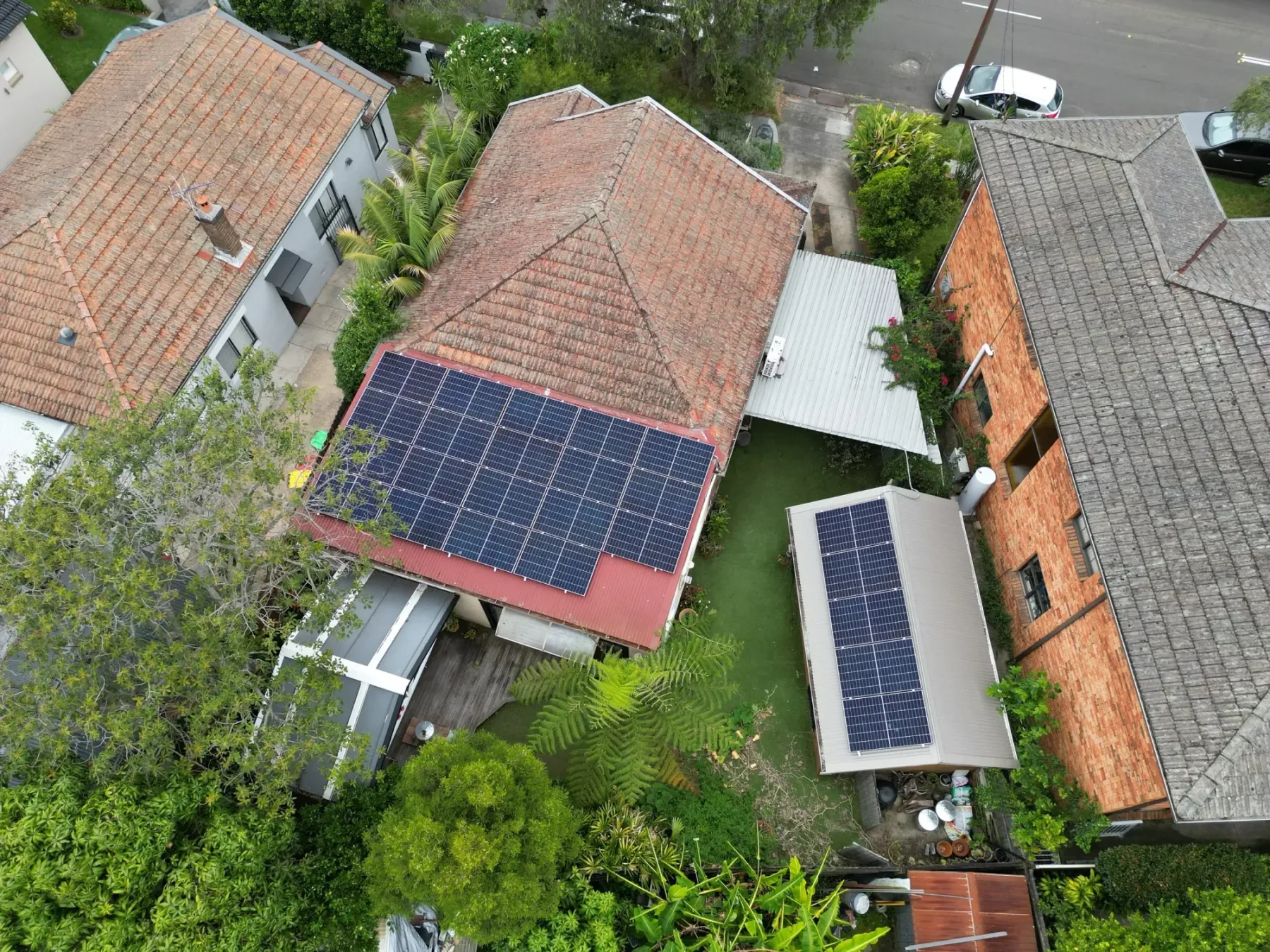
Installing solar, going all-electric and charging an EV at home?
Will I need an expensive electrical upgrade?
A typical older Inner West house that has not had a significant electrical upgrade for several decades will have a single-phase power supply rated between 40 and 63 amps. At the current nominal supply voltage of 230 volts, this equates to approximately 9.2 kilowatts for a 40-amp supply or 14.5 kW for a 63-amp supply.
More recently installed, or upgraded, single-phase supplies are commonly rated at 80 amps, providing approximately 18.4 kW. Some installations may have a 100-amp supply, equivalent to approximately 23 kW.
In the Inner West, our network is owned and run by Ausgrid. There does not appear to have been a single date after which every new Ausgrid-area house was built with an 80-amp supply.
The wires running from Ausgrid’s street network to the house are generally called the “service line”. The “consumer mains” are the customer-owned cables connecting the point of supply to the main switchboard and are usually run inside the house.
With older overhead arrangements, two separate conductors usually indicate single phase and neutral, while four usually indicate three phases and neutral. However, newer aerial-bundled cables may look like a single cable, so the number of visible wires is not always conclusive on whether you already have single-phase or three-phase power to your property.
The quickest way to see whether your property has single phase or three phase supply is by inspecting your meter box. The meter box will contain a large, usually black, fuse carrier, one for each phase. So, one big fuse unit means single phase supply and three big fuse units means three phase supply is connected.
If an older consumer mains cable has insufficient capacity or requires replacement, installing three-phase consumer mains at the same time will often be sensible because the incremental cable cost may be relatively modest. However, the total incremental cost may also involve changes to the service line, switchboard, metering, phase balancing and possibly the local network connection.
If the house already has a sound 80-amp single-phase supply, full electrification is quite achievable without an upgrade. An 80-amp supply provides around 18.4 kW, and a household is unlikely to operate every appliance at its full nameplate rating simultaneously.
(Load control can prevent an EV charger, hot-water system and other major appliances from operating together when demand is high. The correct approach is therefore a maximum-demand assessment of the proposed appliances, rather than simply adding all their maximum ratings together.)
Three phase is not essential for ordinary home EV charging. A single-phase charger can generally provide up to about 7kW, which is sufficient for most overnight charging. Three-phase is required if the customer wants an 11 kW or 22 kW AC charger, subject also to the maximum charging rate accepted by the vehicle.
An induction cooktop’s nameplate rating does not necessarily represent its sustained demand. Many cooktops incorporate power management, and their contribution to maximum demand should be assessed alongside the other loads.
So, whether a house needs an electrical upgrade before installing solar, a battery and going all-electric needs assessment by a licensed electrician or a Level 2 Accredited Service Provider to confirm:
- whether the property has single- or three-phase supply;
- the rating of the service protection device or service fuse;
- the size and condition of the consumer mains;
- the main-switch rating;
- the calculated maximum demand after electrification; and
- whether load management could avoid or defer an upgrade.